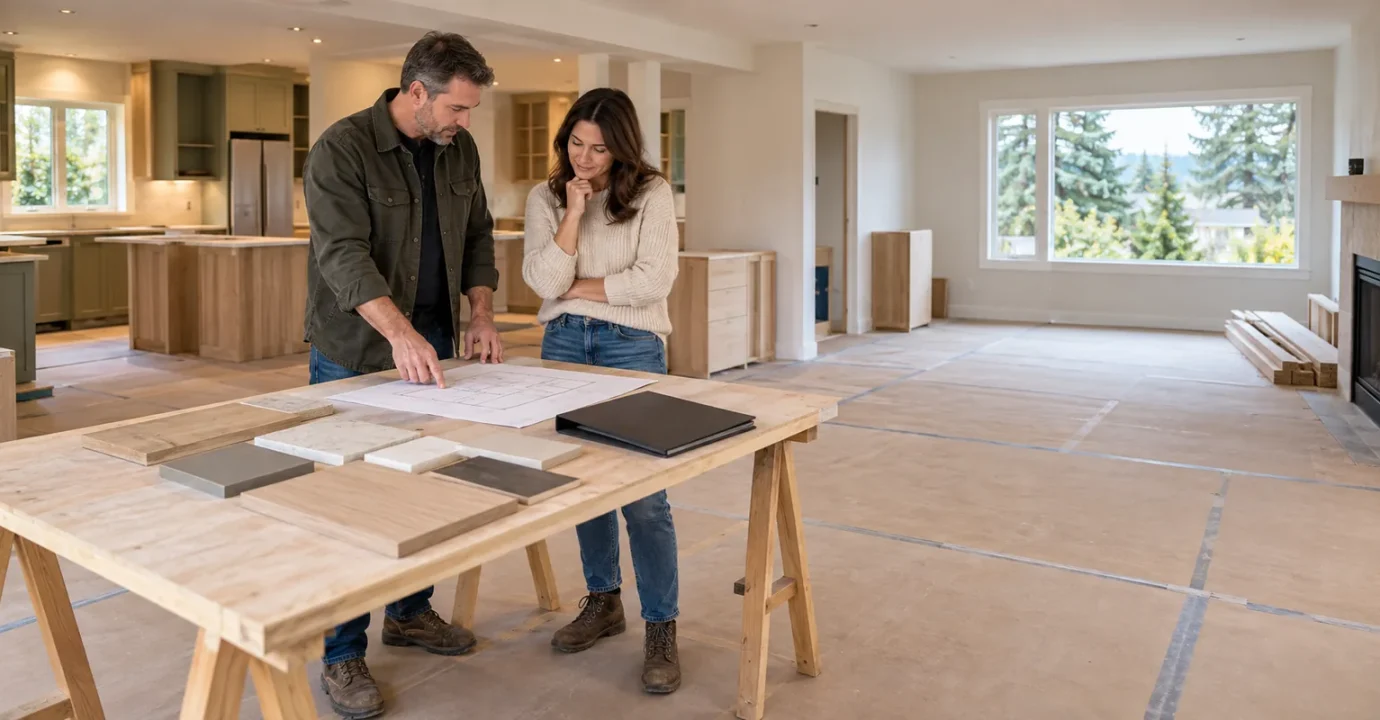
Renovation project management connects the scope of work, budget, construction schedule, and quality checks in one coordinated plan. A general contractor sequences trades, tracks decisions and changes, and checks readiness before each stage proceeds. For homeowners, the practical test is whether responsibilities, costs, dependencies, and acceptance criteria are clear before work starts.
For a multi-trade Vancouver renovation, Vanreno’s General Contracting page is the starting point for discussing the service behind that coordination.
Renovation project management: timeline at a glance
A useful timeline shows dependencies, not just a completion date. Ask what must be decided, delivered, or approved before each stage can begin. The sequence below is a planning framework, not a promise of project duration.
| Stage | What should be confirmed before moving forward |
|---|---|
| Scope and planning | Agreed inclusions, exclusions, responsibilities, and an initial budget. |
| Approvals and procurement | Applicable approvals, coordinated selections, and delivery expectations. |
| Opening up and coordination | Assessment of exposed conditions and approval of necessary changes. |
| Rough work and close-in | Trade coordination, required inspections, and documented readiness to cover work. |
| Finishes and handover | Accepted finish details, outstanding-item list, and relevant closeout records. |
Stage-by-stage breakdown
Define the scope and budget baseline
Start with a written scope of work that identifies rooms, intended outcomes, retained features, and exclusions. “Renovate the main floor” leaves too many decisions open. Specify whether flooring, lighting changes, painting, and making good adjacent surfaces are included.
Budget control means comparing commitments and approved changes with that agreed baseline. Ask which selections are fixed and which use allowances: amounts set aside for items not yet fully chosen. Keep an allowance separate from a contingency reserved for uncertainty, and agree who can authorise spending from either.
Before signing, clarify licensing and insurance evidence appropriate to the contractor and proposed work. Our guide to contractor license requirements BC addresses that separate decision; a project schedule does not establish someone’s qualifications or coverage.
Confirm approvals and selections
Renovation permits belong in the planning discussion. The City of Vancouver’s permit guidance generally identifies moving interior walls or service lines and structural repairs as permit-triggering work. Ask the City to confirm requirements for the actual scope rather than assuming every renovation follows the same route.
Confirm who prepares submissions, tracks responses, and arranges inspections. For projects within the city, consult the Vancouver Building By-law; provincial guidance should not be substituted automatically for the municipality’s requirements.
Resolve dimensions and installation requirements for major selections before committing dependent work. Record expected delivery dates and acceptable alternatives, rather than assuming an order confirmation means the item is on site.
Coordinate trades before closing surfaces
Subcontractor coordination is especially important where several systems share a wall or ceiling. Ask who checks that service routes, cabinet dimensions, lighting positions, and access requirements agree before installation advances.
One useful checkpoint is to compare the coordinated layout with actual site conditions before enclosing services. Confirm required inspections and any design questions are resolved, and retain relevant records. A photograph is useful documentation; it does not replace an inspection or qualified assessment.
If concealed conditions change the plan, request a written change describing the issue, proposed solution, cost effect, and schedule effect. Technical or hazardous conditions need qualified assessment before affected work proceeds; homeowners should not investigate them by disturbing materials themselves.
Check finishes and close out the work
Quality control needs agreed reference points: drawings, approved selections, specified installation requirements, and clearly described finish expectations. A sample or agreed detail can help both parties understand an appearance decision before it is repeated throughout a room.
A second checkpoint is a documented handover review. List incomplete or disputed items, assign responsibility and a next action, and identify relevant inspection records, care instructions, and product information. Confirming how each item will be closed is more useful than relying on a general assurance that everything will be sorted out.
Variables that change duration
Scope changes, permit responses, concealed conditions, delivery changes, and trade availability can affect duration. The effect depends on whether the issue blocks the next essential task. A late decorative accessory may have a different consequence from missing cabinetry that prevents a dependent measurement.
For an occupied Vancouver home, discuss access, work-hour restrictions, shared-building arrangements where applicable, and temporary loss of essential rooms. A realistic plan distinguishes the working schedule from how long the household may need alternative arrangements.
Ask which dates are confirmed and which remain estimates. Request an updated forecast when a dependency changes, with the reason and the next decision clearly identified.
Delay prevention
Use a short decision log containing the item, responsible person, required decision date, and effect of delay. Agree on one route for approving changes so conflicting instructions do not reach different trades.
At each progress discussion, ask:
- What was completed and checked since the last update?
- What must happen before the next trade starts?
- Which owner decisions or deliveries could block that work?
- What has changed in committed cost or forecast completion?
Hypothetical scenario: a homeowner selects a different kitchen sink after cabinetry details are approved. The contractor should check its implications with the relevant trades before treating it as a simple purchase substitution. The useful outcome is an agreed decision and revised plan, not an unsupported promise that the change has no effect.
Homeowner preparation
Bring these questions to a project discussion and record the answers:
- Scope: Can both parties identify included work, exclusions, and unresolved selections?
- Money: Are allowances, uncertainty reserves, and change approvals distinguishable?
- Sequence: Does each major stage have a clear readiness checkpoint?
- Communication: Who issues updates, and who can approve a change?
- Handover: What evidence and outstanding-item record will be provided?
The City’s building and renovating hub provides access to local permit and inspection information. Use it to prepare questions, while leaving project-specific compliance assessment to the appropriate professionals and authority.
FAQ
What is the practical answer to “renovation project management”?
It is the coordination of scope, costs, trades, decisions, and checks so work can progress through agreed stages. Ask to see how those elements connect in the proposed plan.
What factors change the decision?
The number of trades, design uncertainty, approval requirements, occupied-home constraints, and your capacity to coordinate decisions all influence how much management a project needs.
What mistakes should homeowners avoid?
Avoid comparing quotes with different scopes, approving changes verbally without their effects recorded, and treating an estimated completion date as independent of selections, deliveries, or approvals.
When should a general contracting professional be involved?
Involve one during early scope planning when several trades or linked stages need coordination. Establish responsibilities before procurement or construction creates commitments that are difficult to revise.
Discuss your project plan
Bring your scope notes, unresolved selections, and household constraints to a conversation about Vanreno’s General Contracting service. Ask how the proposed budget, sequence, and quality checkpoints would be documented for your renovation.